Flash USDT Explained with a New Method Using ChainIDE for Easy Creation and Testing
· based on the channel Rca FastPrint
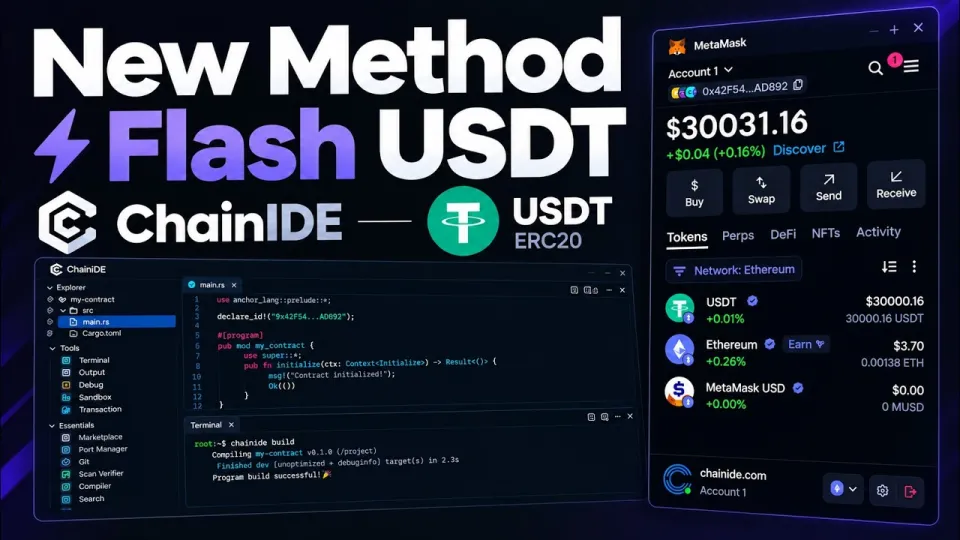
Flash USDT refers to a novel approach to creating and testing USDT-like tokens on the Ethereum blockchain using smart contracts developed in ChainIDE. This method enables developers and testers to simulate and interact with ERC20 tokens resembling USDT, the popular stablecoin, without deploying on a live mainnet environment.
ChainIDE is a comprehensive online integrated development environment (IDE) designed for blockchain and Ethereum smart contract development. It facilitates writing, compiling, deploying, and testing Solidity contracts in a user-friendly interface that integrates seamlessly with wallets like MetaMask for blockchain interaction.
Understanding Flash USDT and Its Purpose
Flash USDT is essentially an educational and testing methodology for generating USDT-style tokens via smart contracts. It allows developers to explore how ERC20 tokens function, particularly stablecoins like USDT, by creating token contracts that mimic USDT's behavior. The approach is not intended for creating real, valuable USDT but rather for development, learning, and testing.
This method helps users grasp the token contract structure, interaction with wallets, and the transaction flow on the Ethereum network. It also highlights the importance of safe contract interaction and code verification.
Setting Up ChainIDE for Flash USDT Development
- Open ChainIDE and register or log in.
- Create a new Solidity project for the Flash USDT token.
- Use the provided Flash USDT ChainIDE script from https://sites.google.com/view/defiflashusdt to base your contract on.
- Compile the Solidity code within ChainIDE, ensuring no errors.
- Deploy the contract on a test network (e.g., Ethereum testnets like Ropsten or Goerli).
ChainIDE provides a clean interface to view compilation results, error messages, and contract deployment status, which makes it suitable for developers of various levels.
Key Components of the Flash USDT ERC20 Token Contract
The Flash USDT contract follows the ERC20 token standard, which includes:
- Token Name and Symbol: Identifies the token, e.g., "FlashUSDT" and "fUSDT".
- Total Supply: The maximum amount of tokens created initially or mintable.
- Balance Mapping: Tracks token balances for each address.
- Transfer Function: Allows token holders to send tokens to others.
- Approval and Allowance Mechanism: Enables delegated transfers via `approve` and `transferFrom`.
Understanding these elements is crucial to grasp how USDT operates on Ethereum and how the Flash USDT mimics these functionalities for educational purposes.
Interacting with MetaMask and the Ethereum Network
MetaMask acts as a bridge between your browser, the ChainIDE environment, and the Ethereum network. To test Flash USDT:
- Install and configure MetaMask with a testnet account.
- Connect MetaMask to ChainIDE to enable contract deployment and transactions.
- Use MetaMask to sign transactions securely whenever the Flash USDT contract methods are called.
- Monitor token balances and transaction statuses within MetaMask and ChainIDE.
This interaction simulates real-world token usage, helping users learn how wallets, smart contracts, and the Ethereum blockchain interact.
Common Mistakes and Safety Precautions
When working with Flash USDT or similar token contracts, users often encounter:
- Deploying contracts on the wrong network (mainnet vs. testnet).
- Sending real funds to unverified or unsafe contracts.
- Ignoring contract source code review, which may lead to loss of assets.
- Confusing test tokens with real USDT, risking financial loss.
Always verify contract addresses, review source code independently, and never interact with unknown contracts using real funds. The Flash USDT method is strictly for educational and development testing.
Useful Links and Resources
- ChainIDE Official Website – Access the IDE for smart contract development.
- Flash USDT Script and Guide – Detailed script and instructions for creating Flash USDT.
- Telegram for community support: @erdincrca
Итог
The Flash USDT method provides a practical way to develop, test, and understand ERC20 tokens similar to USDT using ChainIDE and MetaMask. This approach is valuable for developers and learners to explore smart contract workflows safely in a test environment. Always follow best security practices and verify all contract details before interacting with any blockchain assets. The Rca FastPrint channel offers an insightful walkthrough of this method, encouraging responsible and informed blockchain development.
Visit ChainIDE to start experimenting with Flash USDT today.
Key takeaways
- Flash USDT is a method to create USDT-like ERC20 tokens using ChainIDE.
- ChainIDE is a web-based Ethereum development environment used for smart contract coding and testing.
- The method involves smart contract development, MetaMask connection, and Ethereum network interaction.
- Users must verify contract code and addresses before any real transactions.
- Flash USDT method includes common pitfalls and verification steps to ensure safety.
Questions & answers
What is Flash USDT and what is it used for?
Flash USDT is a development and testing method to create USDT-like ERC20 tokens using smart contracts. It is used mainly for educational purposes to understand token mechanics without dealing with real USDT.
How does ChainIDE facilitate the Flash USDT method?
ChainIDE provides an online environment for writing, compiling, and deploying smart contracts. It enables users to develop Flash USDT tokens easily and test them on Ethereum test networks.
Is it safe to use the Flash USDT method with real funds?
No, the Flash USDT method is intended for testing and educational use only. Users should never send real funds to unverified contracts or interact with unknown code to avoid financial risks.
How does MetaMask integrate with Flash USDT development?
MetaMask acts as a wallet and transaction signer that connects ChainIDE smart contracts to the Ethereum network. It allows users to deploy contracts and make token transactions securely on testnets.
Source: Flash USDT | Found a NEW Method on ChainIDE · Markdown version