7 Steps to Trade Meme Coins Like a Pro After Watching a Live Challenge
Need articles like this for your video? They help promote it on YouTube and Google — order them in the Telegram bot @sat_sit_bot. Articles with your video embedded are written and posted by the bot itself — on popular topical sites (no ads). Your first 50 articles are free.
· based on the channel insentos
Meme coin trading is short-horizon speculation on tokens with no cash flow, where the edge comes from process rather than prediction: you size positions by risk, enter on confirmed momentum, and exit on pre-set rules. The format of a live challenge, like the one insentos runs with a guest pro trader, is useful precisely because it shows that process under pressure instead of a polished recap. If you want to follow along with the same community tooling the host points viewers to, start with a FOMO registration via insentos and read the steps below before risking anything.
What a meme coin actually is and why the challenge format matters
A meme coin is a token whose value rests almost entirely on attention, community and liquidity rather than revenue, so price is driven by flows in and out of a very thin order book. That structure produces the familiar pattern: fast vertical moves, equally fast retracements, and a long tail of tokens that never recover. Watching a professional work in this environment is more instructive than reading theory, because the decisions happen in seconds and the reasoning is usually verbalized in real time. In the insentos video, the guest keeps explaining his thought process even while managing an open position, which is the single most valuable thing a beginner can observe: the trade is not the click, it is the reasoning that precedes it.
7 steps to trade meme coins with a repeatable process
These seven steps turn a viewing session into a checklist you can apply on your own screen. They are deliberately boring, because boring is what survives contact with a market that rewards speed and punishes improvisation.
- Define the risk unit before you open the terminal. Decide what percentage of your portfolio one trade may lose, typically 1–2%, and treat it as a hard cap. With meme coins, slippage and liquidity gaps mean your realized loss can exceed the stop you imagined, so size smaller than feels exciting.
- Screen for liquidity, not for narrative. Check pool depth, holder distribution and whether the token has survived at least one drawdown. A chart that looks identical on two tokens can behave completely differently when one has ten times the liquidity.
- Wait for structure, then enter. Rather than buying the first green candle, look for a higher low after an initial impulse, or a reclaim of a level that previously acted as resistance. The pro in the challenge format is consistently patient about entries and fast about exits.
- Pre-commit your exit in writing. Set a target and a time stop: if the thesis (volume, holders, social traction) does not confirm within a defined window, close the position regardless of profit or loss. Meme coin scalping rewards the trader who leaves first.
- Scale out, don't all-out. Selling a portion into strength locks in gains and keeps you emotionally able to hold the remainder through normal volatility.
- Log every trade. Record entry, exit, thesis, and what actually happened. Twenty logged trades reveal more about your behavior than two hundred unlogged ones.
- Review weekly, not per trade. Judge the process across a sample, because single outcomes in this market are dominated by luck.
The tools and platforms that show up around the challenge
The video description points to a small stack of tools that map neatly onto the workflow above. The Axiom terminal at https://axiom.trade/ is a trading interface built for fast on-chain execution, the kind of environment where meme coin scalps are actually placed. The FOMO community link, https://fomo.family/r/insentos, is the referral entry point the host shares for viewers who want to follow along with the group. Social channels — https://x.com/insentos, https://www.instagram.com/insentos and https://www.tiktok.com/@insentos — carry the short-form updates between longer videos. None of these tools create an edge on their own; they only reduce friction once your rules exist.
Why viewers doubt that pros can be copied
A recurring skepticism in the comments is that these challenge videos often end in a loss, which makes the whole activity look like gambling, and that results are easier when you trade from an influential account. Both points deserve a straight answer. First, a single session is a tiny sample: a professional can execute perfectly and still finish down, because variance in meme coins is enormous and position sizing, not win rate, is what keeps the account alive. Second, audience size genuinely changes the game — a large account can move attention and liquidity, which is an advantage an anonymous trader does not have. The honest conclusion is not that trading is impossible to learn, but that you should copy the risk framework and the exit discipline, not the specific tokens or the P&L of one session.
What beginners should take from a live trading session
The most repeated request under the video is for more content aimed at people with no experience, and the most useful way to consume it is to watch the decisions rather than the results. Pause when a position is opened and ask what information justified it; pause again at the exit and ask whether the rule was followed or the emotion won. Beginners also consistently ask how to actually get into communities that are described as essential — the practical answer is that most groups gate access behind a referral or paid entry, so treat community access as a cost line and evaluate whether the information inside is worth it. Finally, ignore the temptation to scale a small account aggressively: a 50-to-1000 style challenge is entertainment with a survivorship bias built in, and the failures simply do not get uploaded.
Useful links
- FOMO registration via insentos — the community entry point shared in the video.
- https://axiom.trade/ — the trading terminal used for fast on-chain execution.
- https://x.com/insentos — short-form updates and trade commentary.
- https://www.instagram.com/insentos — clips and behind-the-scenes content.
- https://www.tiktok.com/@insentos — short video format.
Final thoughts
The challenge format works because it exposes the unglamorous parts of meme coin trading: hesitation, sizing, and the discipline to cut a position that is not working. The insentos channel deserves credit for keeping the guest talking through his reasoning instead of editing the session into a highlight reel, which is exactly what a new trader needs to see. Take the seven steps above, run them on paper for a few weeks, and only then commit real capital. If you want to follow the same community the host uses, the entry point remains the FOMO link from insentos.
Key takeaways
- Meme coin trading is high-risk scalping, not investing: most positions are decided in minutes, not weeks.
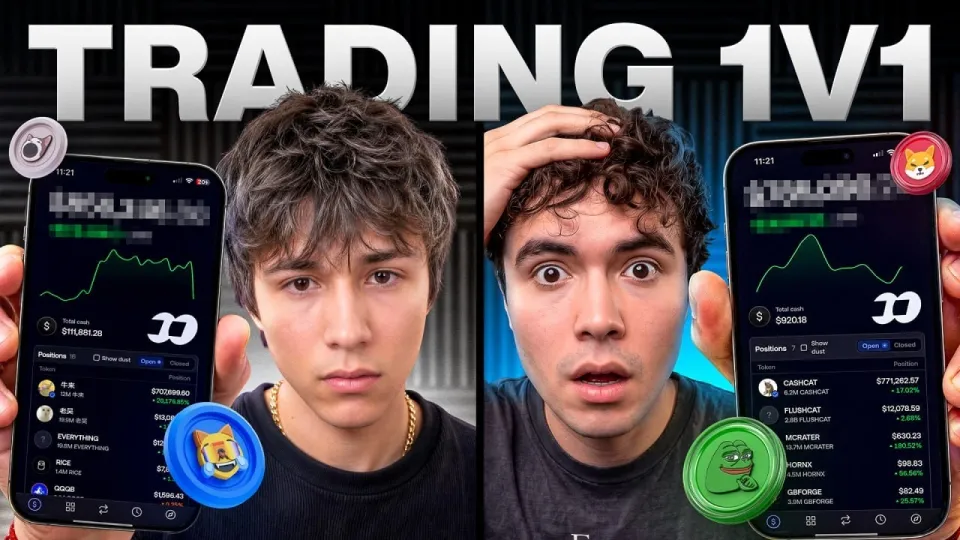
- A live challenge format on insentos pairs an experienced trader with a host, showing real entries and exits in real time.
- Tools mentioned around the video include the Axiom trading terminal and the FOMO community platform.
- Community discussion highlights the gap between watching a pro and replicating results, plus the role of audience size and influence.
- Beginners benefit most from fixed risk per trade and a written exit plan before buying any token.
Questions & answers
Is meme coin trading basically gambling?
It has gambling-like variance, but the difference is process: fixed risk per trade, pre-planned exits and logged results turn it into a probabilistic skill game. Without those rules, it is effectively gambling with extra steps, which is why single-session results say very little about skill.
How much money do I need to start trading meme coins?
You can start with a small amount, but the constraint is fees and slippage rather than the minimum buy. On-chain gas and swap fees eat a meaningful share of tiny positions, so sizing too small makes the math worse, not safer. Pick a risk unit you can lose entirely without changing your life.
Why do pro traders in these videos often end up losing?
A single session is a tiny sample in a market with extreme variance, so a well-executed plan can still finish red. Videos also select for drama, and losing sessions are more interesting to watch than flat ones. Judge the process across dozens of trades, not one stream.
Do I need a large following to trade meme coins profitably?
No, but influence is a real advantage: a large account can draw attention and liquidity, which anonymous traders cannot. Without an audience, you compensate with stricter liquidity screening, faster exits and smaller size relative to the available pool depth.
Source: I Challenged A Pro Memecoin Trader (Who Won?) · Markdown version